
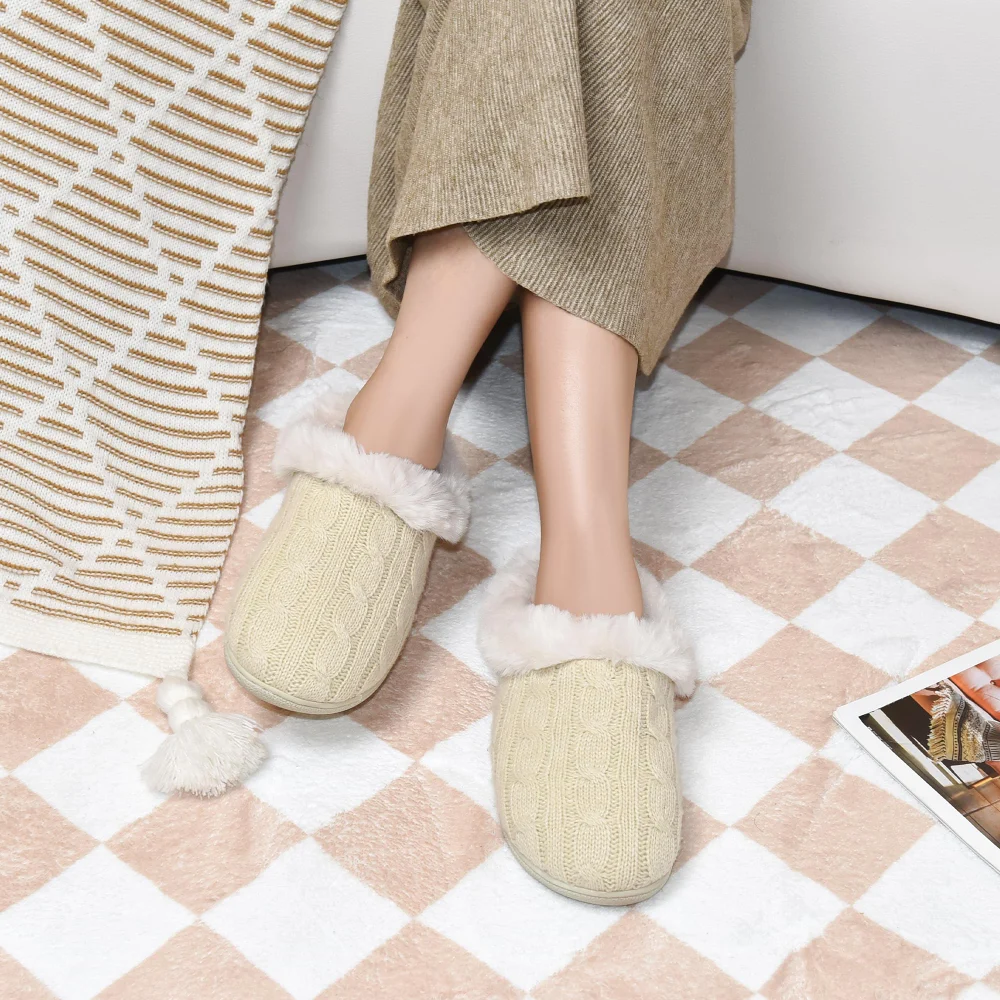
Home is where most of us stop thinking about shoes. It is also where we walk on polished wood in socks, carry laundry down stairs, and stand at the stove for half an hour. The shoe that makes sense in the living room is not always the one that makes sense on the staircase.
The floor decides the shoe
Start with the floor you walk on most. Carpet forgives almost anything. Hardwood and tile are the surfaces where the sole matters.
Our cozy knit house slipper has a textured TPR (thermoplastic rubber) outsole meant for hardwood and tile, under a memory foam midsole and a fleece lining. The men’s highland cow slipper sits on a soft, flexible, non-marking sole. It is quiet on hard floors and leaves no marks, and it is best on carpet and short trips across a room. The knit barefoot Mary Jane flat has a flexible rubber sole and an ankle strap, which makes it the most shoe-like of the three.
Socks, smooth soles and stairs
The National Institute on Aging, writing about falls in older adults, advises against walking on stairs or floors in socks, or in shoes and slippers with smooth soles. It recommends nonskid, rubber-soled, low-heeled shoes. The advice is written for older adults, and most of it makes sense in any house with a polished staircase.
Socks on wood are the easiest way to lose your footing at home. A slipper with a textured sole is a step up from socks. It is not a guarantee, and no slipper makes a staircase safe. Hold the rail, especially with a laundry basket in your arms.
What a slipper is good at, and what it is not
A slipper is made for the short trips. Bed to kitchen, sofa to door, a morning coffee at the counter. Memory foam softens a hard floor, and a fleece lining keeps your feet warm in a room with no rug.
It is less suited to a day of chores, a trip to the garage or anything involving a ladder. A slipper is cut to be easy to step into, and that easy fit is the reason it can come off when you move fast or carry something heavy.
An open back versus a strap
Our knit house slipper has an open back. You can step into it without using your hands, which is the reason people like it.
The NIA lists shoes without backs among the things that raise the risk of a fall. We are not going to pretend our slipper is an exception. If your day at home includes stairs, or you are carrying things around, wear something that closes around your heel. A strapped flat or a closed shoe is the better choice there.
When a flat makes more sense than a slipper
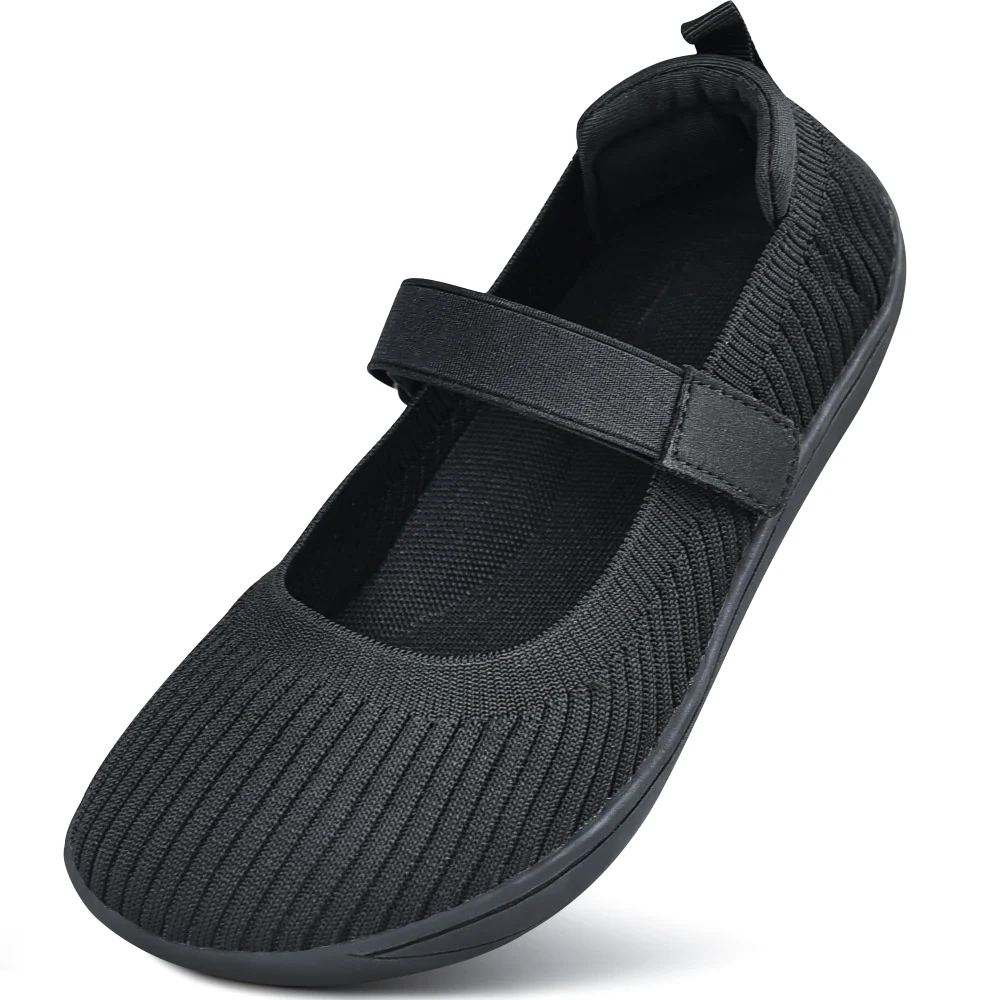
Elvora Knit Barefoot Mary Jane Flat
Knit Mary Jane flat · sizes 5.5-6 to 10.5-11, wide · 2 colors
From $25.99The knit barefoot Mary Jane flat fills the gap between a slipper and an outdoor shoe. The stretch knit upper is soft enough for the house. The adjustable ankle strap holds your heel in place, and the rubber sole can take a walk to the mailbox.
The toe box is wide and rounded, so your toes can lie flat. Sizes come in wide pairs such as 7 to 7.5, and we suggest ordering a half size up. As with any shoe, the AAOS suggests trying the pair toward the end of the day, when feet are at their largest, and leaving about half an inch in front of your longest toe.
Washing and replacing house shoes
The highland cow slipper can go through a cold, gentle machine cycle and should air dry. Our product data lists no washing instructions for the knit slipper, so follow the care label inside the pair.
Replace a pair when the tread on the sole has worn smooth where your heel and the ball of your foot land. At that point the sole no longer does the job the NIA describes. The same goes for a footbed that stays flat after you step off it. Keep a pair by the door for the outside, and let the house pair stay in the house.